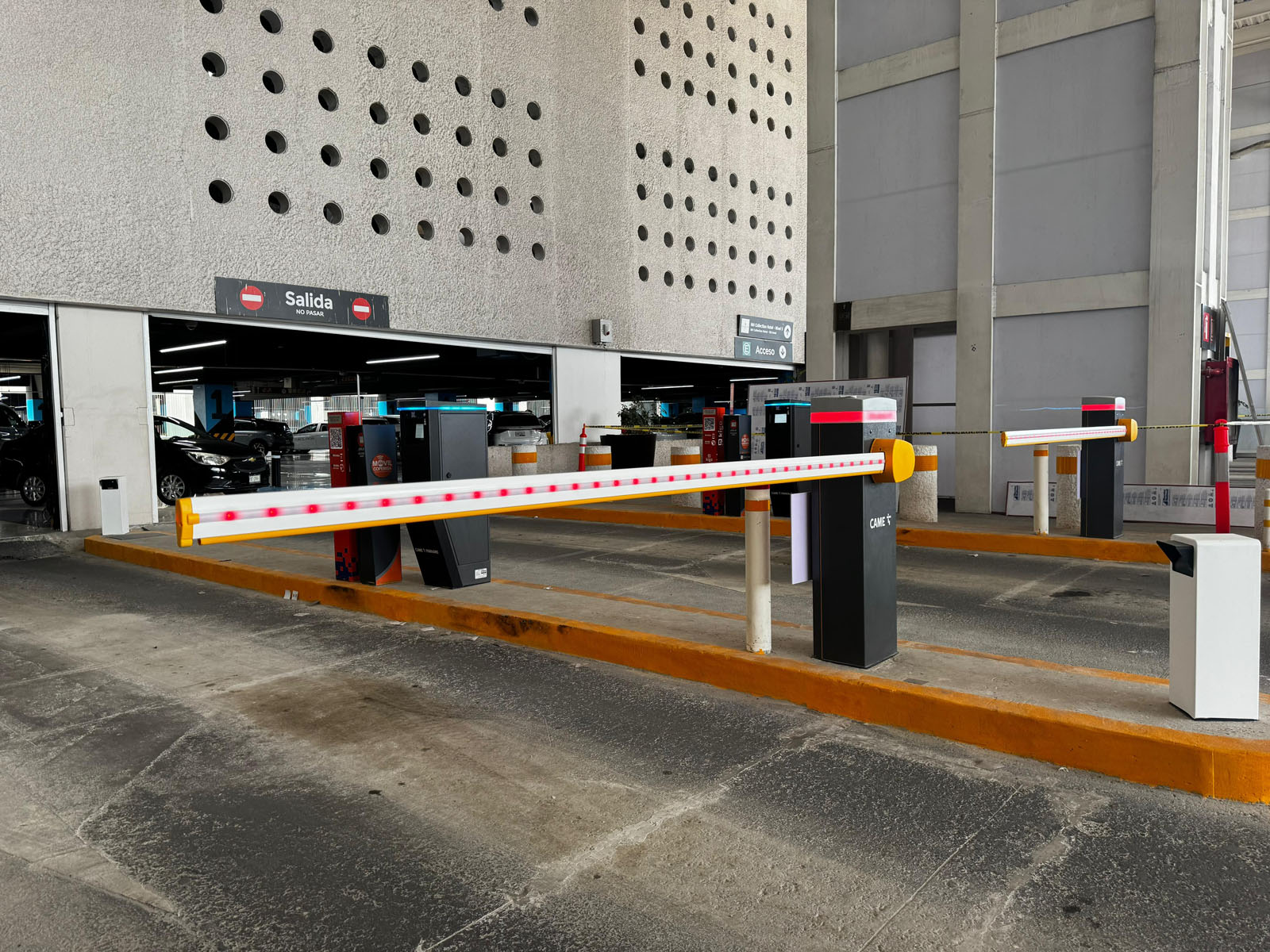
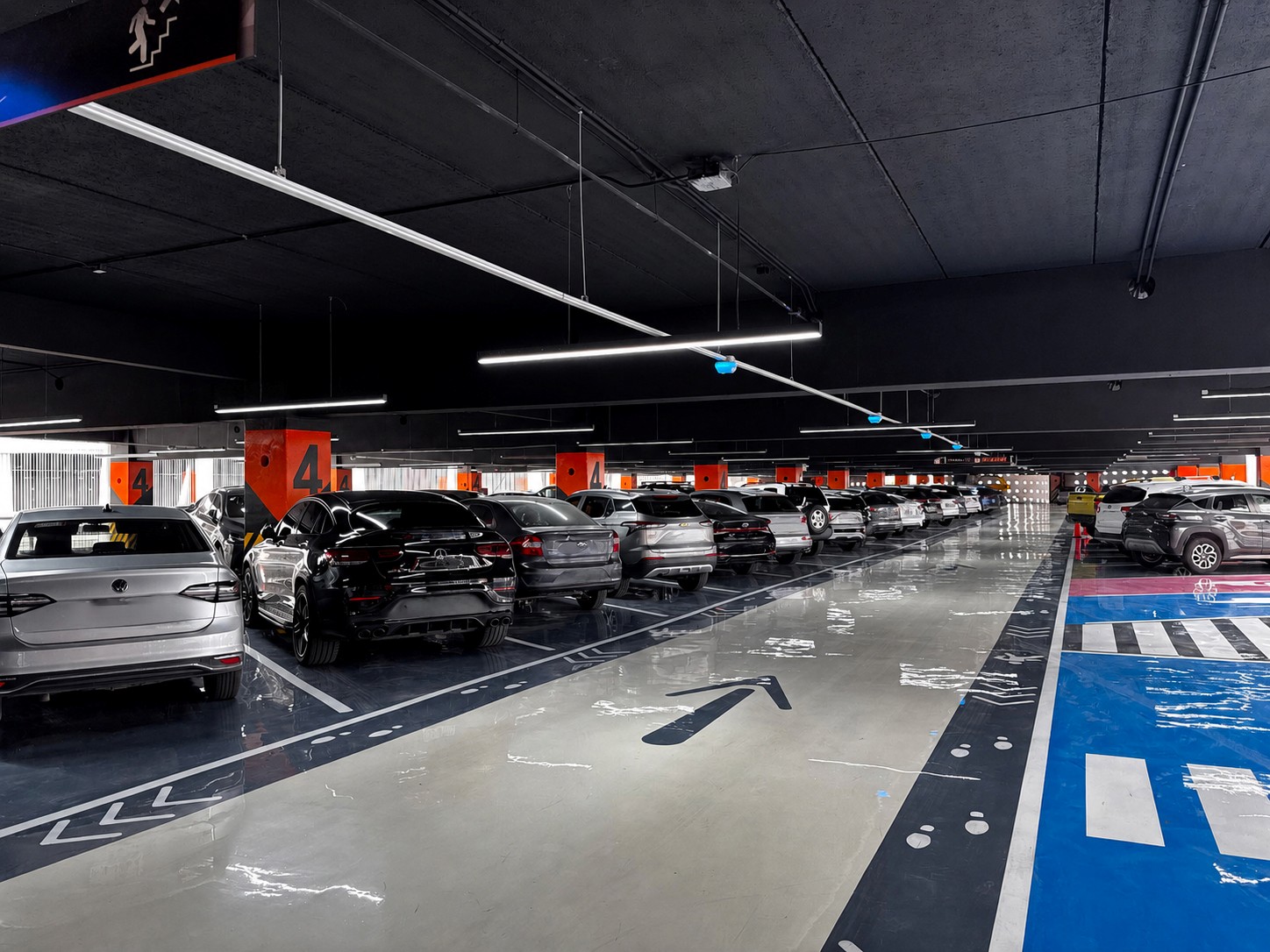
We have completed the work at the Aeropuerto Internacional de la Ciudad de México, where we designed and installed three multi-storey car parks, more than 6,200 parking spaces, 11 entry units, and 22 exit units.
A project of considerable complexity, because an airport never stops. Flows continue, passengers pass through, and operational areas remain active even while they are being upgraded. This is why we carried out the installation in phases, with a dedicated support and maintenance team on site: the system was integrated progressively, without ever interrupting service at one of Latin America’s busiest airports. And it is precisely in contexts like these that parking management ceases to be a marginal element and becomes a central part of airport infrastructure. As Renato Berto, CAME PARKARE and Vice President of CAME’s parking division, explains: “It is not just about organising spaces, because it directly affects the passenger experience and the operational efficiency of airports.”
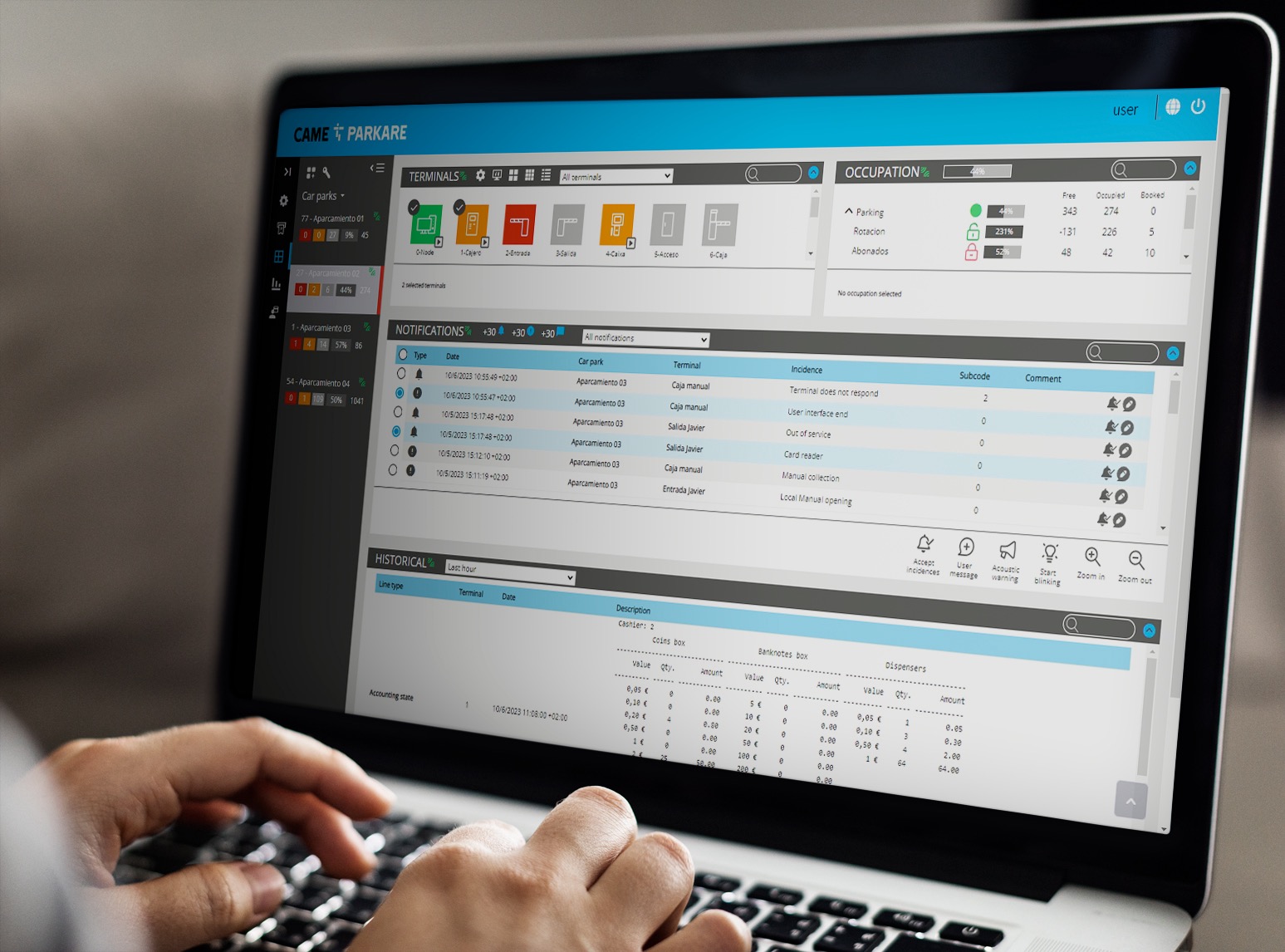
CAME Parkare technology for integrated parking management
At the heart of the project, we placed Lince 7, the parking management software by CAME Parkare. Thanks to its multi-parking feature, Lince 7 enables central supervision of multiple areas simultaneously, real-time flow monitoring and integration with external systems, including licence plate recognition, electric vehicle charging stations and the Find My Car feature. A modular and scalable architecture, designed to handle demand peaks without interrupting service.
We are in 31 airports across Mexico
Mexico City is not a starting point, but a new milestone in a journey built over time. Our parking management solutions are now active in 31 Mexican airports, including Cancún, Monterrey, Guadalajara and Tijuana. This extensive network has enabled us to develop specialised expertise tailored to airport environments of varying sizes and levels of complexity.
From Gatwick to Barcelona, CAME’s global presence
The same approach — based on integrated solutions, operational reliability and the ability to adapt to existing infrastructure — guides our work beyond Mexico as well. At London Gatwick we manage eight parking areas with approximately 40,000 spaces. At Josep Tarradellas Barcelona–El Prat airport we oversaw the technological upgrade with 53 entry lanes, 60 exit lanes and 64 automated pay stations for more than 17,000 spaces. In Spain we cover 75% of the country’s airports, equivalent to 25 terminals.
Next steps
The Mexico City project is a solid foundation to build on. Our focus on the airport sector also extends to pedestrian access control and high-security solutions, for increasingly integrated management of all flows, not only vehicle traffic.
Watch the video of the speech by Francisco Javier Sánchez Fragoso, North – Central America Executive Vice President of Came Mexico, at the Made in Italy Day at the Italian Embassy in Mexico.